Tree Removal Cost Calculator: How to Estimate Your Price

If you have searched for a tree removal cost calculator, you already know the frustration: every site spits out a different number, and none of them have looked at your tree. The honest answer is that no calculator can give you a final price without knowing the specifics of your property. What a good estimate tool can do is get you a realistic range so you can plan a budget before you call anyone out.
At Sion Tree Service we work all over Fort Worth and the wider DFW metroplex, and we price every job the same way: we look at the real factors that drive labor, equipment, and disposal. This guide walks through exactly how a removal estimate is built so you know what is behind the number, plus where to point the on-site calculator for a ballpark before your free, no-pressure estimate.
The four factors that drive almost every removal estimate
Most of the cost on any removal comes down to four things. Get a feel for these and you will understand why two trees that look similar from the street can be priced very differently.
- Height: a 20-foot crepe myrtle and a 60-foot pecan are not in the same world. Taller trees mean more climbing, more rigging, and more time aloft, which is where most of the labor hours go.
- Trunk diameter: a thick, dense trunk is slow, heavy work. A mature live oak or bur oak with a wide trunk takes far longer to section and process than a slim cedar elm of the same height.
- Access: can a truck and chipper get within reach, or does every limb have to be carried through a side gate by hand? Tight backyards, fences, and soft turf all add time.
- Stump: leaving the stump, grinding it flush, or full removal are three different jobs at three different prices. We treat stump work as its own line so you only pay for what you want.
How height and trunk size actually translate to price
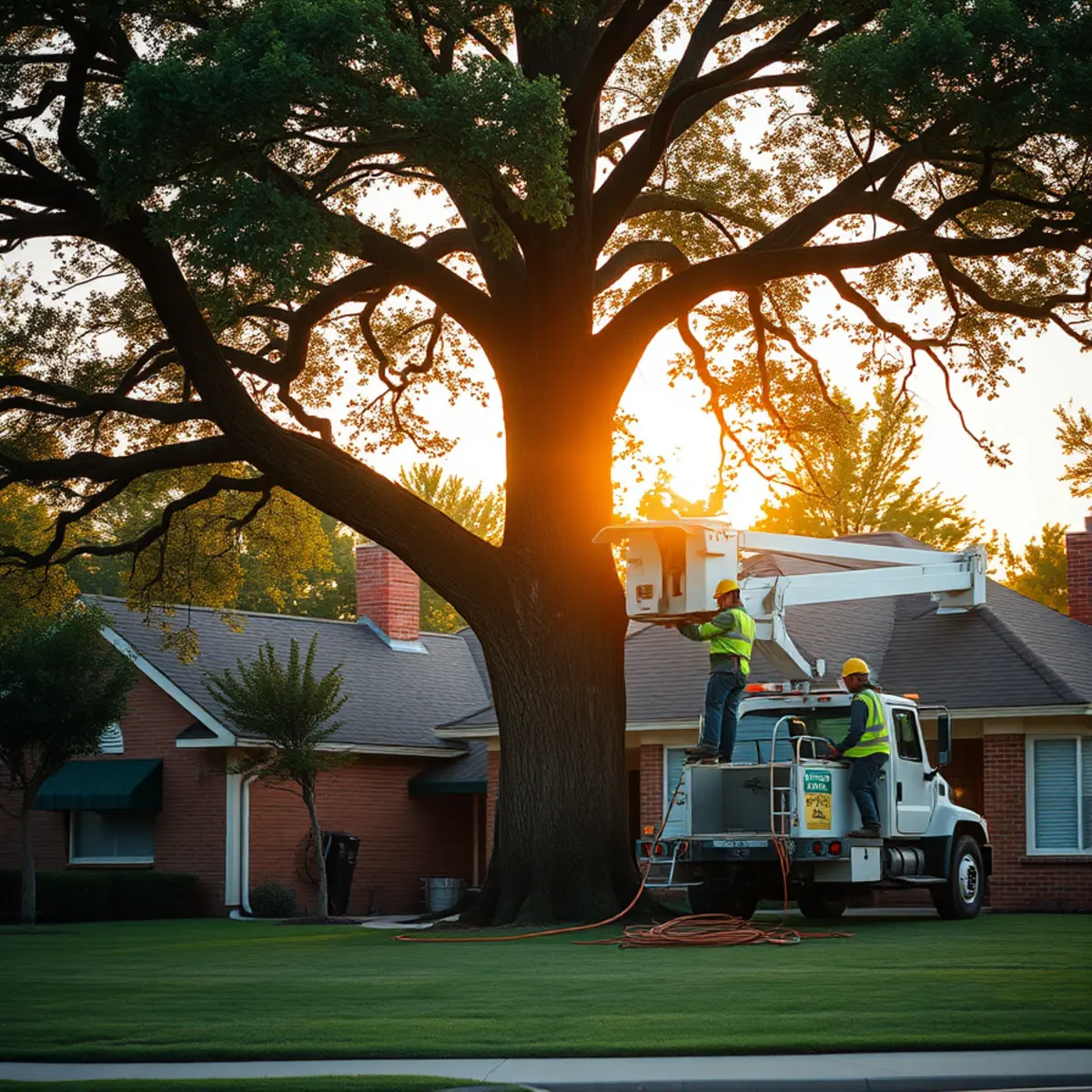
Height and diameter are the backbone of the estimate because they decide how the tree comes down. A short, open tree in a clear yard can often be felled in one piece and chipped quickly. A tall tree near a house, fence, or power line has to be climbed and dismantled piece by piece, with each section roped down so nothing lands where it should not. That controlled, methodical work is slower and takes a trained climber, and it is the single biggest reason prices climb with height.
Trunk diameter adds the weight and density side of the equation. North Texas hardwoods like post oak, live oak, and pecan are heavy and dense, so a wide trunk means more cuts, more hauling, and a chipper or grapple working harder. A fast-growing hackberry of the same height is lighter and usually quicker to process.
Access, location, and condition swing the number more than people expect
Two identical trees can have very different price tags based on where they stand. The things our crews look at on site include:
- Distance from the drop zone to where the truck and chipper can park, and whether limbs must be hauled by hand across a yard.
- Proximity to your house, fence, pool, deck, or a neighbor's property, which calls for slower, more careful rigging.
- Power lines, which add real complexity and sometimes require coordination before any cutting starts.
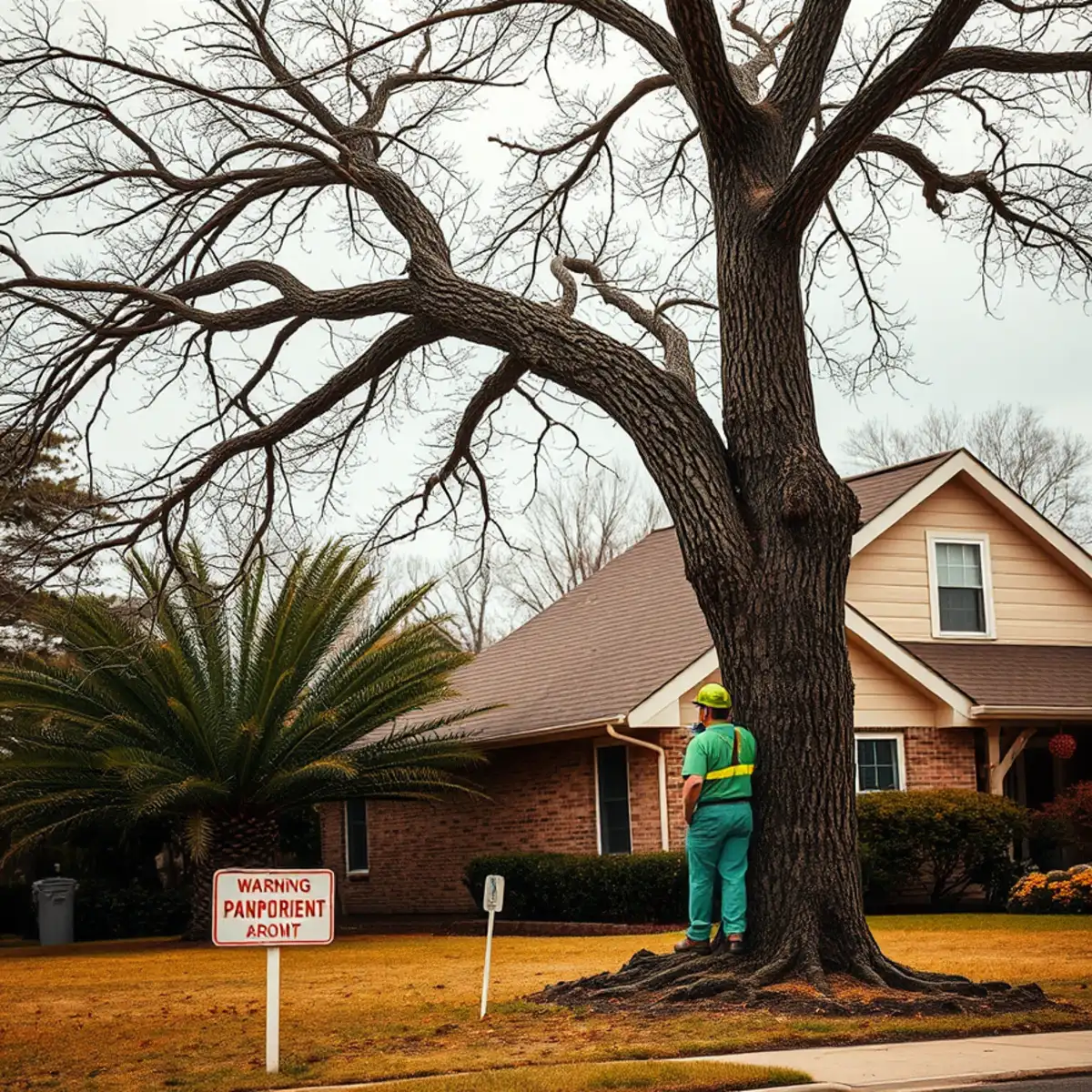
- Tree condition: a dead, storm-damaged, or leaning tree can be more hazardous and unpredictable than a healthy one, which affects how it must be approached.
- Soil and ground conditions: after heavy spring rain, our expansive North Texas clay turns soft, and protecting your turf and driving lanes becomes part of the plan.
Stump grinding and the often-forgotten cleanup
A removal quote and a stump quote are not automatically the same thing, and that is where a lot of homeowners get surprised by other companies. Be clear up front about whether you want the stump left, ground down a few inches below grade for replanting or sod, or fully removed. Larger stumps and stumps with sprawling surface roots, common on mature oaks and pecans here, take more grinding time.
Cleanup matters just as much. Some quotes leave a pile of brush and wood chips sitting in your yard. Ours never do. Complete haul-away and a thorough cleanup are baked into how we work, so the job is not finished until the site looks like we were never there. When you compare estimates, always ask what is included so you are comparing the same scope.
A North Texas timing note that can save you money and trees
Timing is not just about price, it is about tree health. If you have oaks, avoid pruning or wounding them between February and June, the high-risk window for oak wilt in our area. For full removals this is less of a concern, but if you are weighing removal against saving a tree, the season matters. Storm season is another factor: spring hail, wind, and the lingering effects of events like the February 2021 freeze create surges in demand, so getting on the schedule early helps. We keep broad daily hours, 6 AM to 7 PM, specifically so we can respond fast, often same-day or next-day, when a tree comes down unexpectedly.
Use the calculator, then get a real estimate
Our on-site tree removal cost calculator is a great starting point. Plug in your tree's approximate height, trunk size, access, and whether you want stump work, and you will get a realistic range to plan around. Treat that range as a planning tool, not a final bill, because the only way to lock in an accurate, honest price is to have experienced eyes on the actual tree.
That is where our free estimate comes in. We come out, look at the specifics, and give you a clear quote where the number we say is the number you pay, no surprises tacked on later. We are a licensed and insured, locally owned crew with a long track record across Fort Worth and DFW, and we would rather earn your trust with a straight answer than win the job with a lowball. Ready for a real number? Reach out to Sion Tree Service at (208) 635-2100 for a free estimate, and let us show you what an immaculate, hassle-free removal looks like.
Will insurance pay for it? How a claim changes your out-of-pocket number
A calculator estimates the job; insurance decides how much of that estimate actually comes out of your pocket. In Texas, the rule of thumb most carriers follow is simple: removal is usually covered only when a tree falls on a covered structure during a covered event. A live oak knocked onto your roof by a spring derecho or straight-line winds is the textbook example. A healthy tree that drops in the middle of the lawn and hits nothing is almost always on you, no matter how big the cleanup.
Where homeowners get burned is the fine print, so it helps to know what to expect before you file:
- Per-tree caps. Many standard policies cap removal somewhere around 500 to 1,000 dollars per tree even when a structure is hit, so a large pecan on the garage can easily exceed what the policy pays.
- The neglect trap. If a tree was visibly dead, rotted, or storm-cracked for a season and you left it standing, a carrier can deny the claim as preventable. That is one more reason to deal with a declining tree before North Texas storm season, not after.
- Blocked access. Even with no structural damage, some policies will pay to clear a tree blocking your driveway or only safe way in and out. Read your policy or ask your agent.
- Your deductible. If your estimate lands below or near your wind and hail deductible, filing may not be worth it. A planning range from the calculator tells you quickly whether a claim even makes sense.
For documentation, photograph the tree and the damage from several angles before anything is cut, and keep our written estimate and itemized invoice. We are licensed and insured and routinely work with Fort Worth homeowners who are filing claims, so we can give you the clear, itemized paperwork an adjuster wants to see.
Permits, protected oaks, and HOAs: the paperwork that can change your plan
One factor a generic calculator never asks about is whether you are even cleared to take the tree down. Most routine residential removals in Fort Worth are straightforward, but the City has tightened its tree ordinance in recent years, and a few situations trigger an urban forestry permit or extra review. Catching that early keeps your project on schedule instead of stalled.
Situations that commonly call for a closer look before a saw touches the trunk:
- Larger lots and construction. Parcels over an acre, multi-unit properties, and any removal tied to a build or major site work are the ones most likely to need a permit and a documented trunk diameter (DBH, measured at four and a half feet up).
- Protected species. Fort Worth gives extra protection to certain trees, and our native post oaks in particular, so a big specimen oak is not always a free-and-clear removal the way a hackberry usually is.
- Healthy versus hazardous. A genuinely dead, dying, or hazardous tree on a typical single-family lot is generally the easiest case, but documenting that condition matters if anyone asks later.
- Your HOA. Plenty of Tarrant, Denton, and Parker County subdivisions require board approval for front-yard or specimen trees regardless of what the City allows, so check your covenants before you schedule.
None of this needs to be a headache. When you call us out for a free estimate we will flag anything on your property that looks like it might need a permit or HOA sign-off, and point you to the City of Fort Worth Urban Forestry office for the official word. For up-to-date thresholds and any penalties for removing a protected tree without approval, the City is always the final authority, since ordinance details change.
FAQs
No. A calculator gives you a realistic planning range based on height, trunk size, access, and stump choice, but the final price always depends on the specifics of your tree and property. The only way to get an accurate, locked-in number is a free on-site estimate, which we are happy to provide anywhere in Fort Worth and DFW.
North Texas hardwoods like live oak, bur oak, post oak, and pecan have dense, heavy wood and often wide trunks and sprawling roots. That means more cuts, more careful rigging, and more hauling and grinding time than a lighter, faster-growing tree of the same height, which is reflected in the estimate.
Not automatically. Removal and stump work are separate line items, so tell us up front whether you want the stump left, ground below grade, or fully removed. Either way, complete haul-away and a thorough cleanup are always part of our job, so you are never left with a pile of brush or wood chips.
Usually yes, if a covered event like wind brought down the tree onto a covered structure such as your home, garage, or permanent fence. Be aware that many policies cap removal near 500 to 1,000 dollars per tree, and a claim can be denied if the tree was already dead or neglected. Check your deductible and policy limits, and photograph everything before any cutting begins.
Many routine removals of a dead or hazardous tree on a standard single-family lot do not, but permits are more likely on lots over an acre, on construction-related work, and for protected species like post oak. Fort Worth has tightened its tree ordinance, so the City Urban Forestry office is the final authority. We will flag anything that looks like it needs a permit during your free estimate.
Wrap a tape measure around the trunk at about four and a half feet above the ground to get the circumference, then divide that number by roughly 3.14 to get the diameter. That diameter, called DBH, is what arborists and the calculator use, since trunk size is a major driver of removal time and cost. A rough measurement is fine for a planning range.