7 Signs a Tree Needs to Be Removed
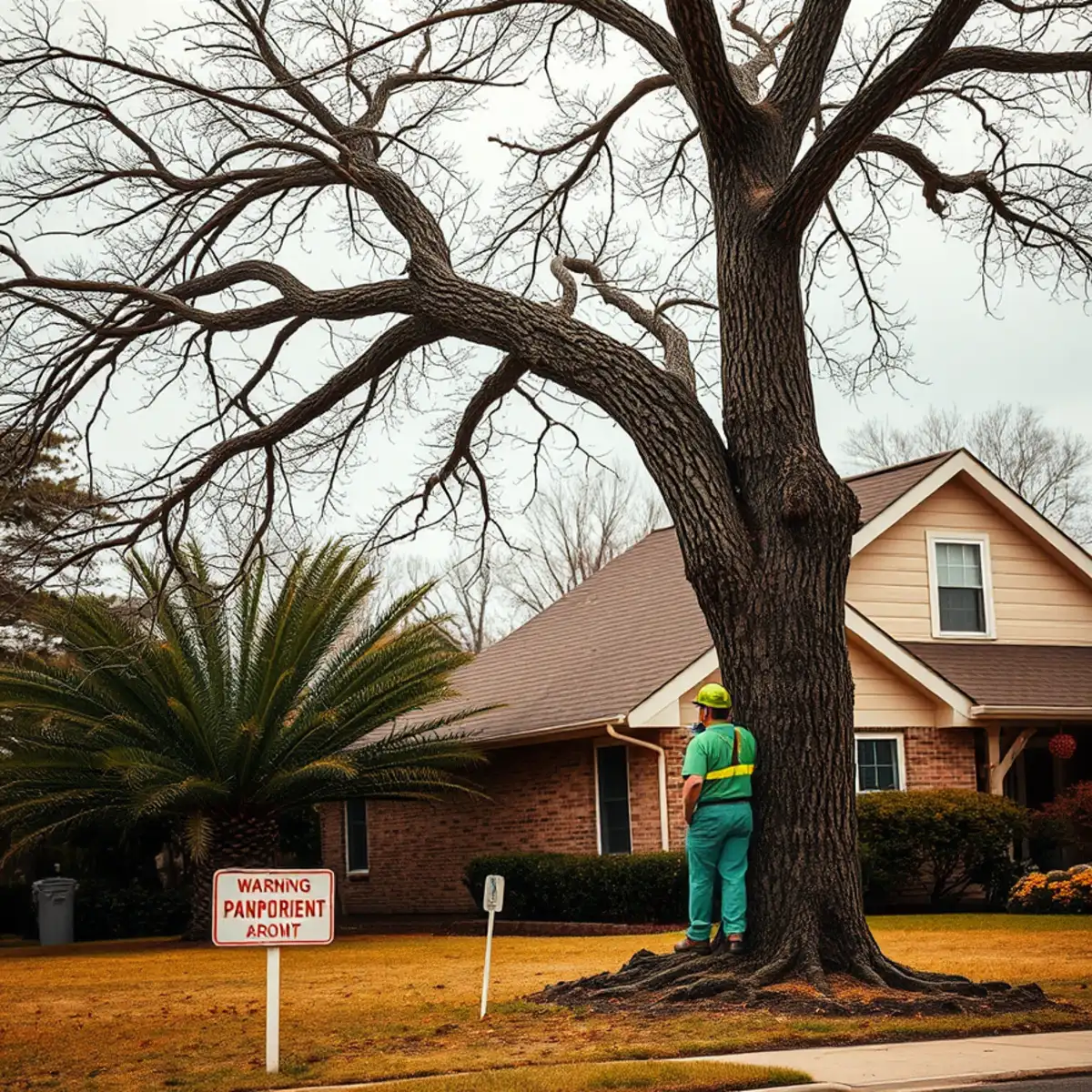
A mature post oak or pecan adds real value to a DFW property, so removing one is never the first thing we suggest. But here in North Texas, between expansive clay soil, oak wilt, drought stress, and our spring storm season, trees take a beating. Sometimes the safest and most cost-effective move is removal before a tree drops a limb on a roof, fence, or car.
Below are seven signs a tree needs removal. One sign on its own may just mean the tree needs a closer look or some pruning. Several signs together usually mean it is time to call in a professional for an honest assessment.
1. Large dead branches or a dead crown
A few dead twigs are normal. Large dead branches, sometimes called widow-makers, are not. They can fall without warning, especially during our gusty spring storms. If more than a quarter to a third of the canopy is dead, the tree is often in serious decline and may not recover.
Watch for these warning signs in the crown:
- Bare branches with no leaves while the rest of the tree leafs out in spring
- Large limbs that have lost their bark and feel brittle or hollow
- Dead wood concentrated on one side, which can throw the tree off balance
- A thinning canopy that lets noticeably more sunlight through each year
With our native oaks, timing matters. We avoid pruning red oaks and live oaks from February through June because open cuts during that window invite the beetles that spread oak wilt. If you have a declining oak, that is a conversation to have with a pro before anyone makes a cut.
2. A sudden or worsening lean
Plenty of healthy trees grow at a slight angle, and that is usually fine. The red flag is a new lean or one that is getting worse, particularly after a storm or a wet spell. North Texas clay swells when it is saturated and shrinks when it dries, and that movement can loosen a root system enough to start tipping a tree.
Take a lean seriously when you also see:
- The soil cracking or mounding up on the side opposite the lean
- Roots lifting out of the ground at the base
- A lean greater than about 15 degrees from vertical
- The tree leaning toward a house, driveway, power line, or play area
3. Root and soil heave at the base
The roots are what hold everything up, so trouble at the base is trouble for the whole tree. If you notice the ground heaving, cracking, or lifting near the trunk, the anchoring roots may be failing. This is common after the kind of heavy, saturating rain we get in spring, which softens our clay soil and reduces its grip.
Root problems are easy to miss because most of the damage is underground. Look for soft or spongy roots, mushrooms growing along the root zone, or a gap opening between the trunk base and the soil. Construction, trenching, and soil grading near a tree can also sever or smother roots, and that damage may not show in the canopy for a year or two.
4. Fungus, mushrooms, and visible decay
Mushrooms or shelf-like conks growing on the trunk, at the base, or over the root flare are often a sign of internal decay. Fungi feed on dead and rotting wood, so where they appear, the wood underneath is frequently compromised even if the bark still looks intact.
Decay hollows a tree from the inside, which weakens its structure long before the outside gives away the problem. Signs of decay and disease to watch for include:
- Conks or mushroom clusters on the trunk or root flare
- Soft, crumbly, or hollow-sounding wood when tapped
- Cavities or open wounds where bark has fallen away
- Oozing, dark seeps running down the bark
- Sawdust-like frass at the base, which can point to boring insects
A tree can live for years with some decay, so this does not always mean immediate removal. It does mean the tree needs to be evaluated for how much sound wood is left holding it up.
5. Cracks, splits, and included bark
Cracks in the trunk or in major limbs are a structural warning sign. A deep vertical split, a crack that runs through the main stem, or two trunks splitting apart at a tight V-shaped union can all fail suddenly under wind or ice load. We still see this kind of damage from the February 2021 freeze, when ice weighed down limbs that had grown with weak, bark-pinched joints.
Pay special attention to trees with two or more main trunks. When bark gets pinched inside a tight fork instead of the limbs fusing together, that union is weak and prone to splitting right down the middle. Crepe myrtles, Bradford pears, and fast-growing hackberries are especially prone to this.
6. Storm damage that cannot be pruned out
DFW gets its share of hail, straight-line winds, and the occasional tornado warning every spring. After a storm, some trees can be cleaned up and saved with proper pruning. Others have lost too much to recover or have become unsafe.
Removal is usually the right call after a storm when you see:
- More than half the canopy broken or stripped away
- A main leader or large limb split from the trunk
- The trunk cracked through or twisted
- The tree hung up on, or leaning into, a structure or power line
If a damaged tree is tangled in utility lines, do not approach it. Keep your distance and call your utility provider and a professional crew.
7. Too close to the house, driveway, or power lines
Sometimes a tree is perfectly healthy and still a problem because of where it is. A trunk planted too close to a foundation can crack slabs and disturb the soil, which is no small thing on our expansive North Texas clay. Limbs scraping the roof tear up shingles, and roots can invade old sewer lines.
Proximity issues worth addressing include:
- Branches growing into or over the roof and gutters
- A trunk crowding the foundation, driveway, or septic system
- Limbs encroaching on power lines
- A large tree positioned so that any failure would land on the house
In many of these cases, careful pruning or crown reduction solves the problem and the tree stays. Removal is a last resort when the tree is simply in the wrong place to manage safely.
When to call a professional
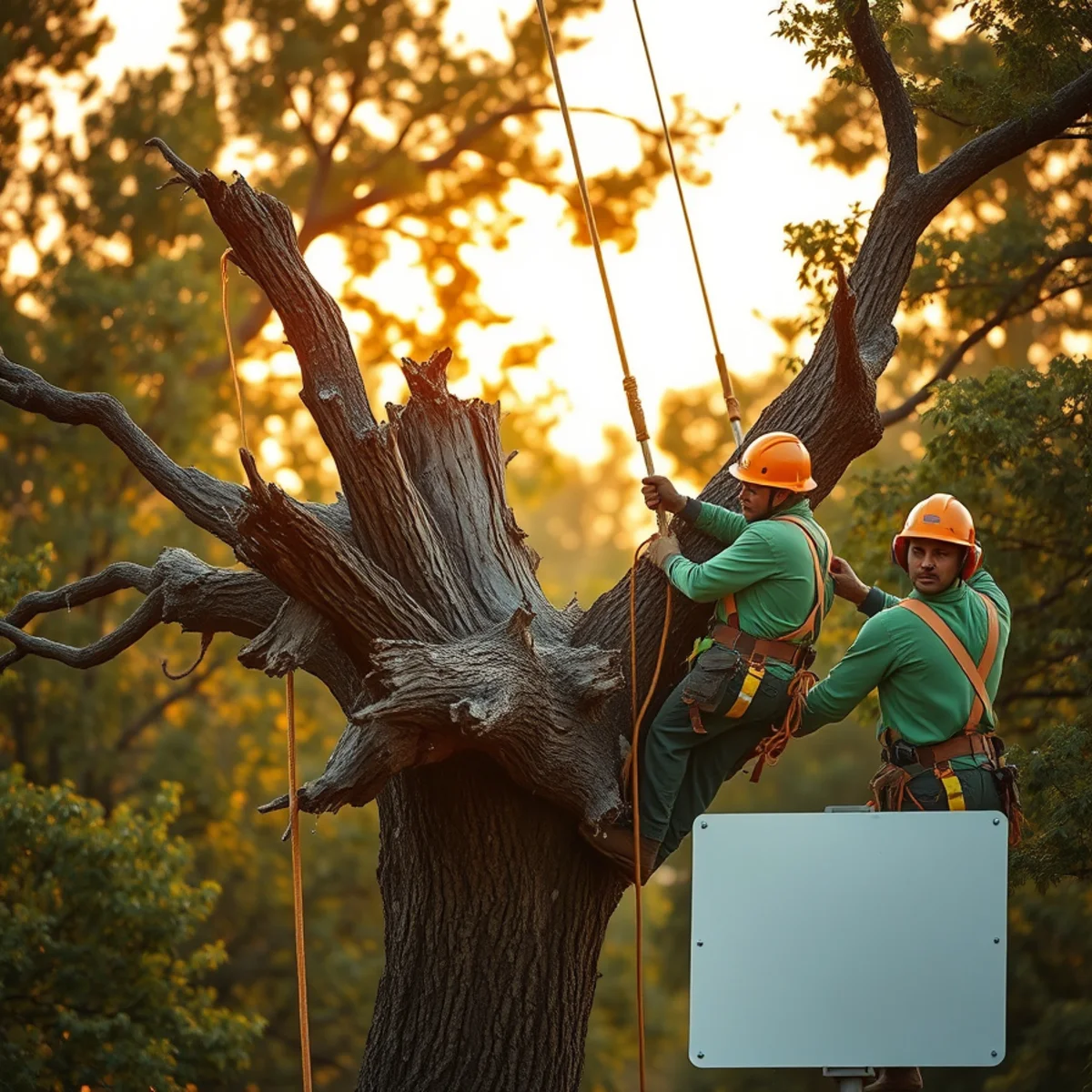
If you spot one of these signs, it is worth a professional set of eyes. If you spot two or more, do not wait. A trained climber can assess what you cannot see from the ground, and removing a large tree safely takes the right equipment, rigging, and experience, especially near a house or power line. This is not a DIY job.
What removal costs depends on the tree's size, species, lean, location, and how much access a crew has, plus haul-away of the debris. Rather than guess, we look at the actual tree and give you a clear, honest quote where the price you are quoted is the price you pay.
Sion Tree Service is a locally owned, licensed and insured tree service serving Fort Worth and the wider DFW metroplex, open daily from 6 AM to 7 PM with free estimates and clean, complete haul-away on every job. If a tree on your property is showing any of these warning signs, call us at (208) 635-2100 or request a free estimate, and we will give you a straight answer about whether it needs to come down.
Hazard or just ugly? Defect plus target is what matters
A sign on its own does not make a tree a hazard. Arborists weigh two things together: a structural defect, and a target the tree could hit if it failed. A hollow, half-dead hackberry standing alone at the back of an acre lot in Weatherford is a tree with problems, not an emergency. Move that same tree next to the kids' trampoline or the driveway in Arlington and it becomes a genuine hazard worth acting on quickly. Both halves of the equation have to line up before removal jumps the line.
That distinction also tells you how fast to move. Use this rough sorting when you are deciding whether to schedule work or pick up the phone tonight:
- Act now: a tree already split, uprooted, leaning hard into a structure, or tangled in an Oncor line, especially with spring storms in the forecast
- Soon, on a schedule: large deadwood, conks, or decay over a target like the house, patio, or where people park
- Watch and plan: a defect with no target under it, such as a leaning tree over an open back corner of the lot
- Routine: cosmetic issues like a thinning crown with no structural defect, which a closer look may show is reversible
One North Texas wrinkle: our worst loads do not arrive gradually. A dead limb that hung on quietly through a dry July can come down in the first 60-mph downburst of the next spring. If a defect sits over a target, do not bank on the tree waiting for a convenient weekend.
Before you cut: permits, HOAs, and property-line trees in DFW
Removal is not only an arborist question in our area, it is sometimes a paperwork question. The rules vary city to city across Tarrant, Parker, Johnson, Denton, and Dallas counties, so the safe habit is to confirm before a saw touches the trunk rather than after.
A few ground rules that hold across most DFW cities:
- In Fort Worth, a single dead, dying, diseased, or hazardous tree on a single-unit lot under an acre can generally come down without a city permit, but larger lots, multi-unit properties, and protected trees are a different story
- Heritage and other protected or significant trees are not covered by that exemption and can carry steep per-inch penalties if removed without approval
- An HOA architectural review is separate from any city rule, so get the HOA sign-off first to avoid doing the city paperwork twice
- Trees whose trunk straddles a property line are shared property, and one neighbor cannot have a boundary tree removed without the other owner's agreement
There is a liability angle too. Once a tree is clearly dead or visibly hazardous and you have been told so, leaving it standing over a neighbor's roof or a public sidewalk can shift responsibility onto you if it fails. A documented assessment and prompt action protect more than the tree. When in doubt, a quick call to your city's urban forestry desk, plus a written opinion from a professional, clears up both the permit and the liability questions before anyone climbs.
FAQs
Not always. A long-standing, gradual lean on an otherwise healthy tree is often fine. The concern is a new or worsening lean, especially with soil cracking or roots lifting at the base, which points to a failing root system. Have a professional evaluate any sudden lean before deciding.
We avoid pruning red oaks and live oaks from February through June because fresh cuts during that period attract the beetles that spread oak wilt. If an oak is hazardous and must come down, a professional can take the right precautions. For non-emergency oak work, it is usually best to wait for the dormant season.
There is no single price. Cost depends on the tree's size and species, its lean and location, how close it is to structures or power lines, crew access, and whether you want the debris hauled away. We give a clear quote after seeing the tree in person, and the quoted price is the final price.
For most homeowners, removing a single dead, dying, diseased, or hazardous tree from a single-unit lot under one acre does not require a city permit. Larger lots, multi-unit properties, and protected, heritage, or significant trees can require an urban forestry permit, and removing a protected tree without one can mean penalties. Confirm with the city before cutting if you are unsure how your tree is classified.
Not necessarily. A dead tree that has stood quietly for months usually needs removal but can be scheduled during normal hours rather than treated as an after-hours emergency. It crosses into emergency territory once it splits, uproots, leans into a structure or power line, or sits over a target with severe weather in the forecast.
A tree whose trunk straddles the boundary is generally considered shared property between both owners in Texas. That means neither neighbor can have it removed without the other's agreement, and both can share responsibility for keeping it from becoming a hazard. For a clearly dead or dangerous boundary tree, it is worth getting both owners and a professional opinion lined up before any work begins.