
Tree Pruning in Fort Worth, TX
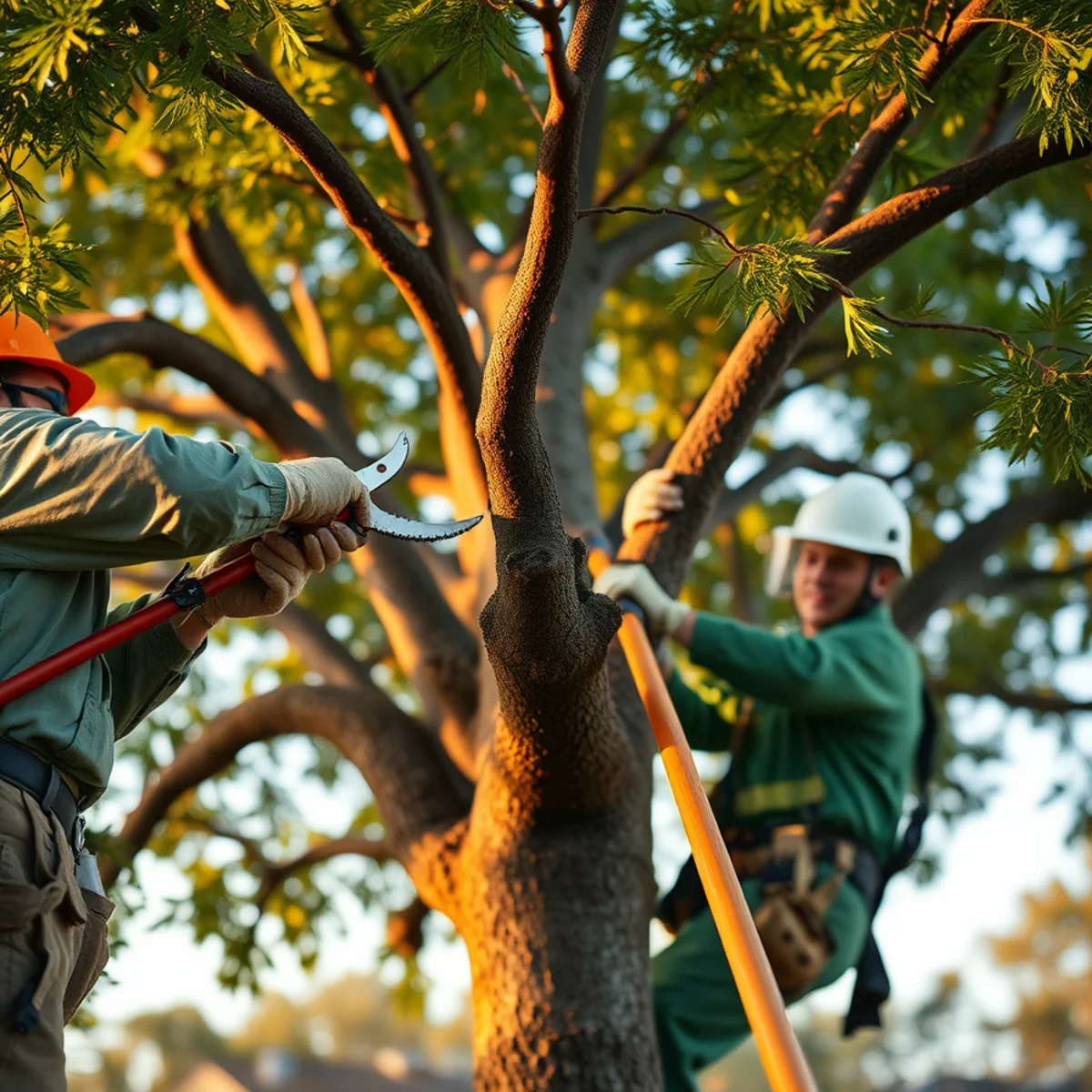
Tree pruning in Fort Worth keeps your trees structurally sound, healthier, and looking their best, and Sion Tree Service does it with trained climbers who understand exactly which branches to cut and which to leave. Pruning is more than shortening limbs. It is selective, purposeful work that improves a tree's structure, removes dead and diseased wood, opens the canopy to light and air, and reduces the storm risk that comes with our spring wind and hail season across the DFW metroplex.
Tree pruning in Fort Worth keeps your trees structurally sound, healthier, and looking their best, and Sion Tree Service does it with trained climbers who understand exactly which branches to cut and which to leave. Pruning is more than shortening limbs. It is selective, purposeful work that improves a tree's structure, removes dead and diseased wood, opens the canopy to light and air, and reduces the storm risk that comes with our spring wind and hail season across the DFW metroplex.
There is a real difference between pruning and trimming. Trimming is mostly about shape and clearance, while pruning is about the long-term health and architecture of the tree. We prune for structure on young live oaks and red oaks, thin crowded canopies on mature post oak and pecan, train fruit trees for better production, and always work around North Texas concerns like oak wilt. Every cut is made at the right place on the branch so the wound seals cleanly instead of inviting decay.
What's Included
- A walk-through with you to confirm goals, problem limbs, and the right pruning approach for each tree
- Removal of dead, dying, broken, and diseased branches to improve safety and health
- Structural and subordination cuts on young oaks and shade trees to develop strong form
- Crown thinning to reduce wind resistance and let light and air move through the canopy
- Crown raising to clear branches off your roof, driveway, walkways, and sightlines
- Proper cuts made just outside the branch collar so wounds seal naturally without flush-cutting
- Oak-wilt-safe scheduling, with sealing of any necessary oak cuts when work cannot wait
- Complete cleanup and haul-away of all limbs, brush, and debris from the work area
- Crown reduction using proper drop-crotch cuts back to a living lateral at least one-third the diameter of the limb removed, never stub or heading cuts that force weak watersprout regrowth
- Selective end-weight and clearance pruning over roofs, pools, fences, and Oncor service drops, with sap-feeding-beetle risk managed on any oak work
- Removal of included-bark codominant unions and over-extended lateral limbs on mature live oaks and cedar elms before clay-soil lean or storm load splits them
- Correction of prior bad work such as lion-tailed canopies and flush cuts, restoring interior foliage and re-establishing a sound branch collar where possible
- Vista and understory pruning that lifts and thins selectively without exceeding the live-canopy budget the tree can recover from in one season
When to Call for Tree Pruning
- Branches are growing into your roof, power lines, driveway, or blocking sightlines
- You see dead, hanging, or broken limbs after a North Texas storm or freeze
- A young tree has competing trunks or crossing branches that need early correction
- The canopy is so dense that little light reaches your lawn or beds below
- Your fruit trees have stopped producing well or have become overgrown and tangled
- You bought an older Fort Worth home in Arlington Heights, Mistletoe Heights, or Ryan Place with mature post oaks that have never been structurally pruned
- A previous crew left your tree lion-tailed with all foliage shoved to the branch tips, or topped it into knuckled stubs that are now sprouting weakly
- Limbs are encroaching on Oncor service drops or the public right-of-way along the street and you need clearance without violating utility rules
- Bradford or ornamental pears, crepe myrtles, or fruit trees have crossing, tangled growth or fire-blight strikes that need targeted removal
Why Tree Pruning Pays Off
Stronger structure
Selective cuts on young trees build one dominant trunk and well-spaced branches, preventing the weak, codominant unions that split apart in DFW storms years later.
Better tree health
Removing dead, diseased, and crossing limbs stops decay from spreading and lets the tree put energy into healthy growth instead of fighting damaged wood.
Lower storm risk
Thinning a dense canopy lets wind pass through instead of pushing against a sail of leaves, reducing the chance of limb failure during spring hail and wind events.
More light and air
Opening the crown brings sunlight to your lawn and beds below and improves air circulation, which discourages the fungal problems our humid stretches can bring.
Healthier fruit trees
Proper pruning of peach, plum, fig, and other fruit trees improves airflow, sun exposure, and fruit size while keeping growth manageable and easy to harvest.
Cleaner curb appeal
A well-pruned tree looks balanced and intentional, not hacked, and we haul away every branch so your property looks like we were never there.
How Our Tree Pruning Works
Free estimate
We meet at your property, listen to your goals, assess each tree's structure and health, and give you a clear written quote at no cost and no pressure.
Smart scheduling
We book a time that works for you and plan around oak-wilt timing, weather, and access so the job is done safely and at the right point in the season.
Precise pruning
Our climbers make targeted, proper cuts at the branch collar, removing the right wood for structure, health, and clearance while protecting the rest of the tree.
Spotless cleanup
We haul away every limb and pile of brush, rake the area, and leave your yard cleaner than we found it before walking it with you to confirm you are happy.
What Drives Your Tree Pruning Cost in Fort Worth
Pruning price depends on the number, size, and species of trees, how tall and accessible they are, the amount and type of wood being removed, and how much cleanup and haul-away the job requires. A young tree needing structural training costs far less than thinning a large, mature pecan over a house. We provide free estimates with honest, quoted-equals-final pricing, so the number we give you is the number you pay.
Pruning objective
Light structural training on a young tree is far cheaper than crown reduction or end-weight pruning on a large mature live oak, because the time, rigging, and skill required scale with the work.
Tree size and climbing difficulty
Tall trees that must be climbed and rigged limb by limb over a roof or pool cost more than a small tree a crew can reach and work from the ground or a single ladder set.
Oak-wilt timing and sealing
Oak work scheduled inside the higher-risk window requires immediate cut sealing and extra caution, and some non-urgent oak pruning is best deferred to a safer season, which affects scheduling and price.
Access and obstacles
Tight side-yard access, proximity to Oncor lines, fences, structures, and septic or sprinkler lines in our clay soil all add rigging time and care to the job.
Volume and type of debris
The amount of wood removed and whether it is brushy small growth or heavy hardwood limbs drives chipping, hauling, and disposal time, all of which we fold into the quoted price.
Corrective work
Repairing a previously topped or lion-tailed tree is slower and more selective than maintaining a tree that has been properly pruned all along, so restorative jobs take more labor.
The local details most companies skip — what every Fort Worth homeowner should understand about tree pruning before the work begins.
Proper Pruning Cuts vs Topping and Lion-Tailing on North Texas Trees
The fastest way to ruin a healthy Fort Worth shade tree is to hand it to a crew that prunes by the shortcut. Two of the most damaging shortcuts we are called to repair are topping and lion-tailing, and both look like a lot of work got done while actually setting the tree up to fail in our wind and hail season. Good pruning is the opposite of indiscriminate cutting; every cut has a reason and a precise location.
Why topping is never the answer
Topping cuts large limbs back to stubs with no living lateral to take over, which starves the tree, exposes inner bark to sunscald in the Texas heat, and triggers a panic flush of watersprouts. Those sprouts are only weakly attached to the surface and become the very limbs that snap out in the next derecho or ice load. A topped tree is more dangerous and more expensive over time, not less.
What lion-tailing does to a limb
Lion-tailing strips all the interior foliage off a branch and leaves a tuft only at the tip, like a lion's tail. It feels like thinning but it moves weight to the end of a bare, whip-like limb, raises the odds of sudden summer limb drop, and removes the small interior growth that builds taper and strength. We restore lion-tailed trees by letting interior buds break again and stopping the tip-heavy cutting.
- A correct reduction cut goes back to a living lateral at least one-third the diameter of the limb removed
- A correct removal cut is made just outside the swollen branch collar, never flush to the trunk and never leaving a long stub
- No more than about a quarter of a healthy tree's live canopy comes off in a single year, and less on stressed trees
- Interior and lower foliage is preserved deliberately to build strong, tapered, storm-resistant limbs
Oak-Wilt-Safe Pruning and Seasonal Timing in Tarrant County
North Texas lives and dies by its oaks, and oak wilt is the disease that can take a mature live oak or red oak in a matter of weeks. The fungus spreads when sap-feeding beetles carry spores to fresh wounds, and pruning is the single most controllable way a homeowner either invites that risk or shuts it down. That is why timing matters as much as technique on any oak in Arlington Heights, Tanglewood, Westover Hills, or anywhere across Tarrant, Parker, Johnson, Denton, and Dallas counties.
The window to avoid and the windows to use
We avoid non-emergency oak pruning from February through June, the period when beetle activity and fungal mats overlap and fresh oak cuts are most attractive to the insects that spread the disease. The dormant winter months and the hot, dry stretch of late summer are far safer. Red oaks are especially vulnerable, and we plan oak work around these windows rather than convenience.
When an oak limb cannot wait
Storms, freezes, and the occasional spring derecho do not respect the calendar. When a hanging or broken oak limb is a genuine hazard during the risky window, the safe move is to make a clean, proper cut and seal it immediately, within minutes, so the exposed wood stops drawing beetles. This is the one situation where sealing oak cuts is genuinely protective rather than cosmetic.
- Plan all routine oak pruning for late fall through winter or the heat of late summer
- Treat February through June as off-limits for oak cuts unless it is a true safety emergency
- Paint emergency oak cuts immediately; skip the paint on most other species so wounds seal naturally
- Watch for early oak wilt signs such as leaf veins yellowing or browning, especially on red oaks, and call before pruning a tree you suspect is already infected
Species-Specific Pruning for Fort Worth Yards
The right cut on a post oak is the wrong cut on a crepe myrtle. North Texas yards hold a wide mix of natives and ornamentals, each with its own habit, timing, and weak points, and pruning them all the same way is how trees get hurt. Knowing the species is half the job.
Native shade trees
Live oak, post oak, bur oak, red oak, cedar elm, pecan, and bur oak respond best to structural and crown work in their safe windows, with the oak-wilt timing rules above governing every oak. Cedar elms and pecans tolerate thinning to reduce wind sail, and bur oaks and pecans benefit from early structural pruning to prevent the heavy codominant limbs that fail under ice.
Ornamentals and fruit trees
Crepe myrtles should be pruned with selective thinning, never the stubbed-back 'crepe murder' that produces ugly knuckles and weak whips. Ornamental and Bradford pears are prone to splitting at tight crotches and to fire blight, which calls for removing strikes well below the infected wood and disinfecting between cuts. Fruit trees like peach, plum, and fig are best opened up while dormant in late winter for light, airflow, and reachable fruit.
- Oaks: prune only in safe windows, seal emergency cuts immediately, watch for oak wilt
- Crepe myrtles: thin selectively, never top into knuckles
- Bradford and ornamental pears: address splitting crotches and cut fire-blight strikes well below the infection
- Fruit trees: open the canopy during winter dormancy for better sun, air, and yield
- Cedar elm and pecan: thin to reduce wind load and correct structure early
Smart Homeowner Tips Before You Hire Anyone
A few habits that protect your wallet, your property, and your insurance claim — whether you hire us or not.
Get the certificate of insurance sent straight from the insurer and confirm it includes workers compensation, so a climber's injury never becomes your liability.
Never let anyone top your tree or leave it lion-tailed; both create weak, hazard-prone regrowth and are the clearest sign of an untrained crew.
If you own oaks, schedule pruning for the dormant winter window or the heat of late summer and refuse any non-emergency oak cuts from February through June.
Insist that every cut be made just outside the branch collar, because flush cuts destroy the tree's natural defense zone and invite decay into the trunk.
Be skeptical of a salesperson who recommends removing huge amounts of canopy in one visit; sound pruning rarely exceeds about a quarter of live growth per year.
Start structural pruning while a tree is young, because a few correcting cuts at planting age prevent the codominant trunks that split apart in DFW storms decades later.
Tree Pruning Across Fort Worth & DFW
Serving Fort Worth and the surrounding Dallas–Fort Worth metroplex, seven days a week.
Fort Worth neighborhoods we work in often:
Trusted by Local Homeowners
“Sion Tree Service did an outstanding job trimming the trees at my home. The crew of 6 came in and quickly removed all the dead limbs and trees that needed to come out. Their cleanup was amazing! Highly recommend them!”
“Very fast work, arrived right on time, workers very professional and cleaned up before leaving. The price was what was quoted. I'd recommend them to anyone needing tree trimming. I'll be using them again!”
“Great communication and super responsive. Squeezed me in the next day and did an awesome job removing and grinding a large tree that had fallen in a storm. Have used them twice with great service both times.”
Tree Pruning FAQs
Trimming is mostly about shape, size, and clearance, while pruning is targeted work for the tree's long-term health and structure. Pruning removes dead, diseased, and poorly placed branches and shapes how a tree grows for years to come. We do both, and during your free estimate we will tell you honestly which your trees actually need.
For oaks we avoid pruning from February through June, the high-risk window for oak wilt, because fresh cuts during that period attract the beetles that spread the disease. The ideal time is the dormant season in winter or the hot, dry part of late summer. If a storm-damaged oak limb must come down during the risky window, we seal the cut immediately to protect the tree.
Most mature shade trees in North Texas do well with pruning every three to five years, depending on species, growth rate, and condition. Young trees benefit from lighter structural pruning more often, every year or two, to build strong form early. We will recommend a sensible schedule for your specific trees rather than pushing unnecessary work.
Yes. Peach, plum, fig, and other fruit trees need regular pruning to open the canopy to sunlight and air, encourage productive growth, and keep fruit within easy reach. We prune for both health and yield, and the best time for most fruit trees here is late winter while they are dormant.
Proper pruning helps a healthy tree, but over-pruning or bad cuts can stress and damage it. We never remove more live wood than a tree can handle and always cut just outside the branch collar so wounds seal naturally. Our trained climbers focus on what the tree actually needs, not on stripping it down.
Ask any company for a current certificate of insurance sent directly from their insurer, not a photo, and confirm it lists both general liability and workers compensation so you are not liable if someone is hurt in your yard. Reputable crews prune to the ANSI A300 standard and follow oak-wilt rules; an arborist who offers to top your tree or cannot explain why they avoid oak cuts February through June is a red flag. Sion Tree Service is licensed and insured with trained climbers, and we are glad to walk you through what each cut accomplishes before we make it.
For routine pruning of trees on private residential property, the City of Fort Worth generally does not require a permit, but protected and heritage trees, commercial sites, and work in the public right-of-way can carry separate rules, and many HOAs and historic districts like Fairmount add their own restrictions. Pruning that affects Oncor power lines is handled under utility clearance rules rather than a homeowner permit. We can tell you during the free estimate whether anything about your specific situation needs a closer look before we start.
As a general rule no more than about a quarter of a healthy tree's live canopy should be removed in a single year, and far less on a mature, stressed, or drought-weakened North Texas tree. Removing too much living wood at once forces a flush of weak watersprouts, sunscalds exposed bark, and robs the tree of the energy it needs in our summer heat. If a tree needs heavy correction we often stage the work across seasons rather than overdoing it in one visit.
On oaks, yes during the higher-risk window, because freshly cut oak wood releases a scent that draws the sap-feeding beetles that carry oak wilt, so any necessary oak cut should be painted within minutes. On most other species in North Texas, wound paint provides no benefit and trees seal better when the cut is left open and made just outside the branch collar. The real protection is correct timing and a proper cut, not a coat of paint on everything.
Often it can be improved, though it cannot be fully undone. For a topped tree we can select the strongest new shoots to become the future structure and remove the weak, poorly attached ones over a few visits, and for a lion-tailed canopy we let interior growth return and stop the harmful tip-heavy cutting. We will give you an honest assessment of what is recoverable versus what now poses a long-term failure risk.
Related Tree & Yard Services
Tree Trimming
Expert tree trimming for healthier growth, better curb appeal, and safer clearance.
Learn MoreTree Health Care & Disease Treatment
Arborist-minded care for sick, stressed, and storm-weary North Texas trees
Learn MoreArborist Services
Experienced arborist insight for tree health, risk and preservation across DFW.
Learn MoreReady for Tree Pruning in Fort Worth?
Call Sion Tree Service for tree pruning done safely, affordably, and cleanly — with a free, no-obligation estimate.
Open daily 6 AM–7 PM · Serving Fort Worth & the DFW metroplex