How Much Does Tree Removal Cost in Fort Worth, TX?
If you are searching for tree removal cost in Fort Worth, you have probably noticed that no two quotes look the same, and the ranges online can feel all over the map. That is not because companies are guessing. Tree removal is priced job by job because every tree, every yard, and every property in the DFW metroplex is a little different. A small crepe myrtle near an open driveway is a completely different job from a 60-foot live oak leaning over a roofline.
This guide breaks down the real factors that determine the price of removing a tree in North Texas, why honest estimates vary, and how to make sure the number you are quoted is the number you actually pay. We keep the cost talk in plain factors and ranges instead of made-up figures, because the only accurate price for your tree comes from someone standing in your yard looking at it.
The biggest factor: tree size
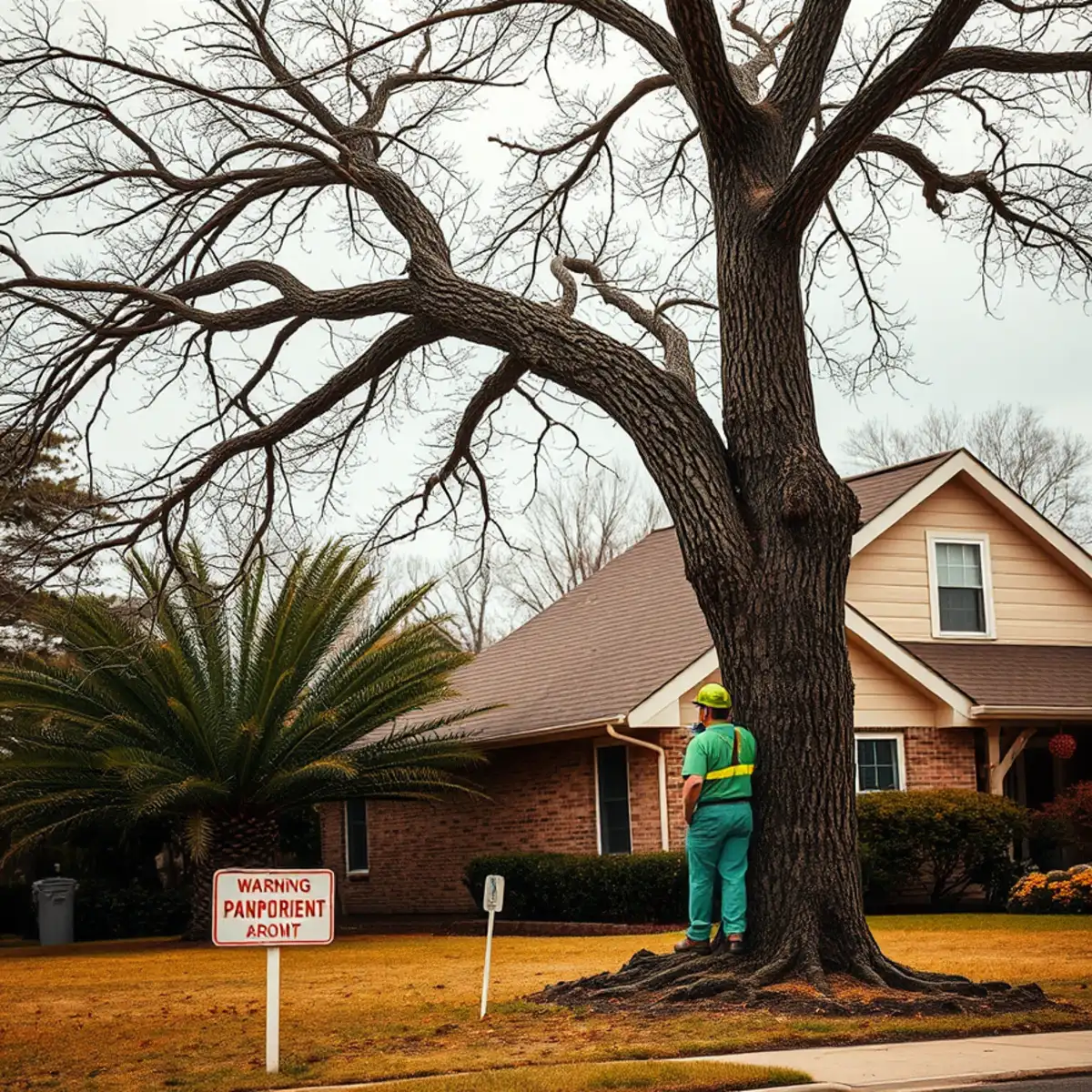
Size is the single largest driver of tree removal cost, and it is not just about height. Crews price the work based on the overall mass that has to be cut, lowered, and hauled away. A tall, slender tree can be easier to handle than a shorter tree with a massive, spreading canopy and a thick trunk.
- Small trees (roughly under 25 feet) such as young crepe myrtles, Ashe juniper (cedar), or yaupon are typically the most affordable to remove.
- Medium trees (around 25 to 50 feet) like cedar elm, hackberry, and red oak take more time, more cutting, and more cleanup.
- Large trees (50 feet and up) such as mature live oak, post oak, bur oak, and pecan carry the highest cost because of their weight, dense wood, and large limbs.
- Trunk diameter matters as much as height. A thick, multi-trunk tree means more cuts and more material to process.
Species and wood density in North Texas
The kind of tree you have affects how long removal takes. Our native North Texas hardwoods are heavy and slow to cut. A mature post oak or bur oak has dense, hard wood that is tough on equipment and crews, so it takes longer than a softer, faster-growing tree of the same height. Pecans tend to have wide, sprawling limbs that require careful, piece-by-piece lowering. Multi-trunk trees like some crepe myrtles and hackberries add labor because each stem is effectively its own small removal.
There is also a seasonal note specific to oaks here. We do not prune or cut live oaks and red oaks during the high-risk oak wilt window of roughly February through June unless it is a genuine emergency, and when we must, fresh cuts are sealed immediately. For non-emergency oak work, timing the job outside that window protects the rest of your trees, and we will walk you through that during the estimate.
Location, access, and what is around the tree
Where the tree stands often matters more than the tree itself. A tree in an open front yard where a truck and chipper can pull right up is straightforward. The price climbs when access is tight or the tree is surrounded by things that can be damaged.
- Proximity to the house, fence, garage, deck, or pool means limbs have to be roped and lowered piece by piece rather than felled.
- Power lines and utility drops require extra caution and slower, more deliberate work.
- Backyard trees with only a narrow gate or no equipment access mean material is carried out by hand.
- Tight DFW lots, neighboring structures, sheds, and septic or irrigation lines all add planning and time.
- Soft, wet ground or expansive clay soil after rain can limit when heavy equipment can safely operate.
Hazard level, dead trees, and storm damage
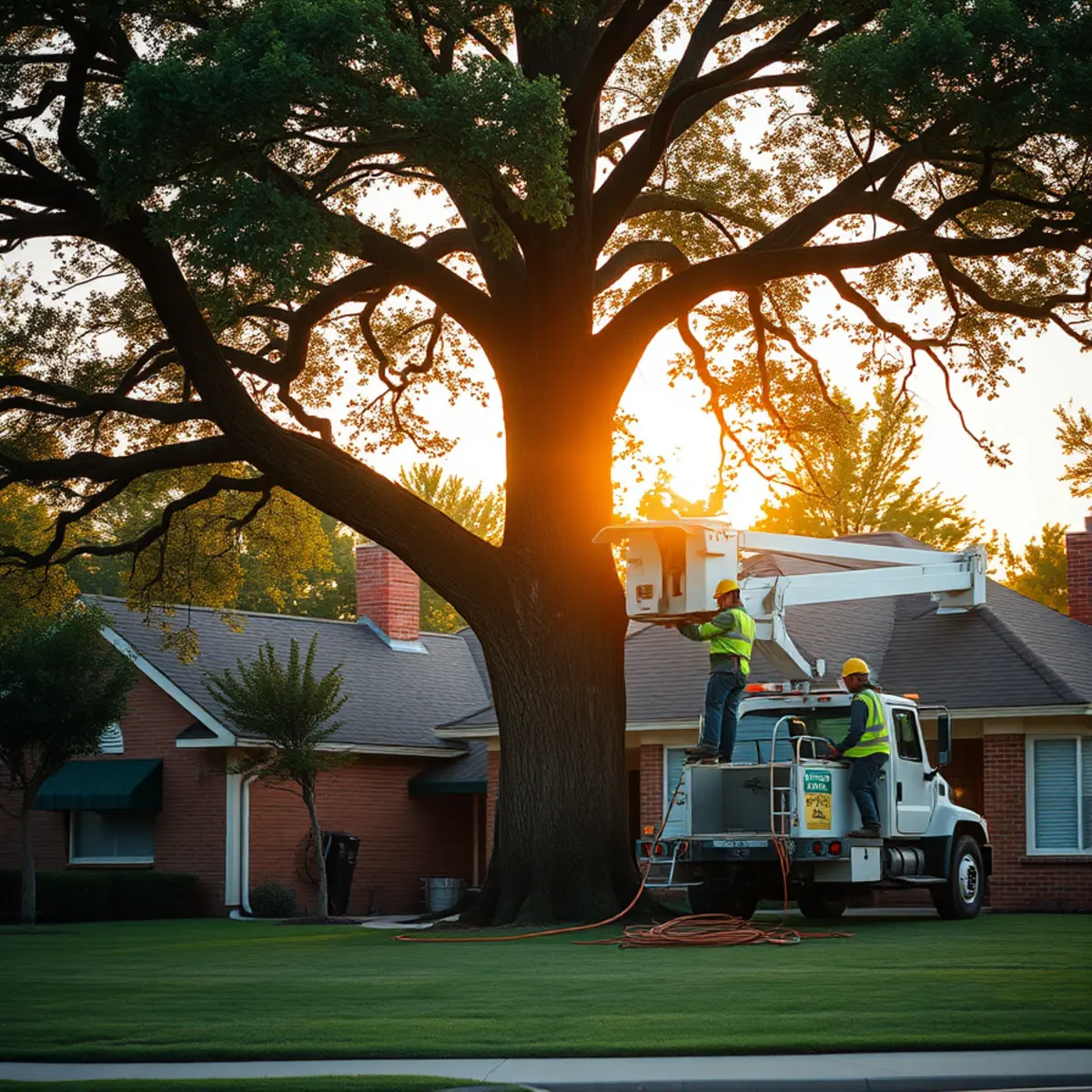
A healthy, stable tree is more predictable to remove than a hazardous one. Dead, hollow, storm-damaged, or leaning trees are harder and riskier because the wood can be unpredictable and cannot always be climbed safely. North Texas sees real seasonal damage, from spring hail, wind, and storms to the lingering effects of the February 2021 freeze and ongoing drought stress on our native trees. Those conditions create trees that have to be taken down using specialized rigging or, in some cases, a crane or bucket truck rather than a climber.
Emergency and after-hours removal, like a tree on a roof or blocking a driveway after a storm, is priced differently than planned work because it requires an immediate response and added safety measures. Because we are open daily from 6 AM to 7 PM, we can often respond same-day or next-day when a tree becomes an urgent hazard.
Stump, cleanup, and haul-away
Removing the tree and dealing with what is left are two related but separate parts of the job, and both affect the total.
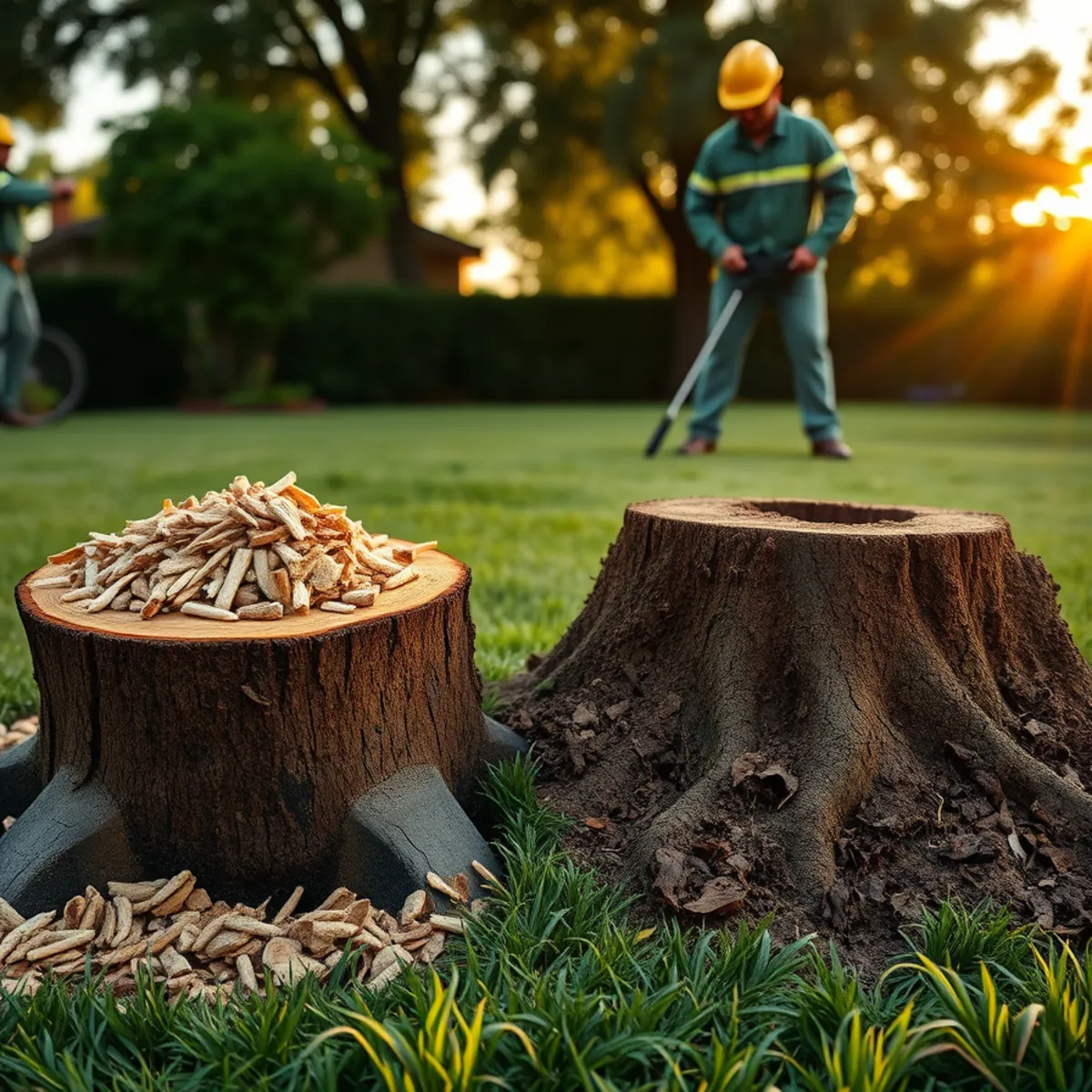
- Stump grinding is usually quoted separately from the removal. A wide stump, or one with surface roots, takes longer to grind down.
- Stump size, hardness, and how far below grade you want it ground all factor in.
- Cleanup and haul-away of logs, brush, and debris is included in how we work, and a larger tree simply produces more material to remove.
- Some homeowners keep the wood for firewood or want chips left for mulch, which can adjust the scope.
On every job, clean-up is part of the price, not an afterthought. Our goal is to leave your yard looking like we were never there, with the debris hauled off and the area raked clean.
Why honest estimates vary, and how ours work
Because all of these factors stack on top of each other, two trees that look similar from the street can carry very different prices. That is also why we do not give a firm number over the phone without seeing the tree. A real estimate accounts for size, species, access, hazards, nearby structures, and the stump and cleanup you want done.
What we commit to is simple: the price we quote is the price you pay. No surprise add-ons after the work starts, no padding. We are a locally owned, licensed and insured owner-operator company, not a national chain routing your job through a call center, and that is why our estimates are free and straightforward.
If you want a clear, no-pressure number for your specific tree, reach out to Sion Tree Service for a free estimate. We will look at your tree, explain exactly what the job involves, and give you an honest quote you can count on. Call us at (208) 635-2100, and we will take it from there.
Permits, the Fort Worth tree ordinance, and HOA approval
One cost most homeowners never think about until the last minute is paperwork. Fort Worth regulates tree removal under its Urban Forestry ordinance, and whether you need a permit depends on the tree and your lot, not just on the fact that the tree is yours. For most established single-family lots under an acre, you can remove one dead, dying, diseased, or hazardous tree without a city permit, but larger or protected trees are a different story. Getting this wrong can be expensive, because the city raised penalties in 2025 to hundreds of dollars per inch of trunk diameter for removing a protected tree without authorization.
Here are the situations where it is worth a quick call to the city before any cutting starts:
- Significant trees, generally those around 24 inches in diameter at breast height or larger, and a lower threshold for post oak and blackjack oak in parts of the city east of I-35W.
- Heritage trees and any removal tied to a building permit, new construction, or a major remodel.
- Lots larger than one acre, multi-unit properties, or any clearing that would take out a large share of the existing canopy.
- Trees in a city right-of-way, an easement, or close to the street, which can fall under different rules than the rest of your yard.
A city permit is also not the same thing as approval from your homeowners association. Many newer DFW subdivisions in Keller, Southlake, Colleyville, Grapevine, and master-planned parts of Fort Worth have an architectural review committee that wants sign-off before a mature tree comes down, and some neighborhoods require a replacement tree be planted. Sort out the HOA before you schedule the work, not after. As your tree service, we will tell you when a job looks like it may trip the ordinance or a heritage threshold so you can confirm with the city, but the permit and HOA approval themselves stay in the property owner's name.
Who pays: insurance, storm trees, and a neighbor's tree over the fence
After a North Texas storm, the first question is usually who pays to take the tree down. The honest answer is that insurance helps less often than people expect, and the rules turn on what the tree hit, not just that it fell. A healthy tree that blows over in a spring windstorm or hailstorm and lands on nothing but your lawn is almost always your cost to remove, because most homeowners policies only step in once the tree damages a covered structure.
The general pattern in Texas works like this, though your own policy and deductible are what actually govern, so read it or call your agent:
- Tree hits the house, garage, fence, or other covered structure, or blocks the driveway: your policy will often cover the damage repair plus some removal, frequently with a capped debris-removal allowance per tree or per event.
- Tree falls and hits nothing: usually not covered, and removal comes out of pocket.
- A neighbor's tree falls onto your property: in most storm cases you file on your own policy, because a neighbor is generally not liable for an act of nature.
- The exception that matters here: if a tree was visibly dead or hazardous, the owner was warned, and it then failed, negligence can shift responsibility. That is why documenting a clearly declining tree near a property line is worth doing before it falls.
Two practical notes for the metroplex. First, our expansive Blackland clay holds water and then cracks in drought, and that movement loosens root plates, so a tree that looks fine can be quietly destabilizing. Removing a leaner before the next storm is far cheaper than an emergency call afterward. Second, if you do file a claim, keep it simple: photograph the damage, save our written estimate, and avoid cutting beyond what is needed to make the property safe until the adjuster has seen it.
FAQs
We can talk through the factors and rough ranges, but an accurate price requires seeing the tree. Size, species, access, hazards, nearby structures, and stump and cleanup all change the cost, so we provide a free on-site estimate and the quoted price is the price you pay.
Stump grinding is usually quoted as a separate line item from the removal itself, because stump size, hardness, surface roots, and how far below grade you want it ground all affect the time involved. We will include it in your estimate if you want the stump handled.
Yes. We are open daily from 6 AM to 7 PM and can often respond same-day or next-day for urgent hazards like a tree on a roof or blocking access after a storm. Emergency and after-hours work is priced differently than planned removals because it requires immediate response and added safety measures.
It depends on the tree and lot. On most established single-family lots under an acre you can remove one dead, dying, diseased, or hazardous tree without a city permit, but larger significant or heritage trees, construction-related removals, and bigger properties can require one under the Urban Forestry ordinance. Because penalties for removing a protected tree without authorization are steep, confirm with the city when a tree is large or you are unsure.
Often only if the tree damaged a covered structure like your house, garage, or fence, or blocked the driveway, and even then debris removal is frequently capped per tree or per event. A healthy tree that falls and hits nothing is usually your cost to remove. Check your specific policy and deductible, since coverage varies between carriers.
In most storm cases you file on your own homeowners policy, because a neighbor generally is not liable for an act of nature. The exception is negligence: if the tree was clearly dead or hazardous and the owner was warned but did nothing, responsibility can shift to them. Documenting a visibly declining tree near the property line ahead of time is what makes that case.