Stump Removal vs. Stump Grinding: Which Is Right for You?
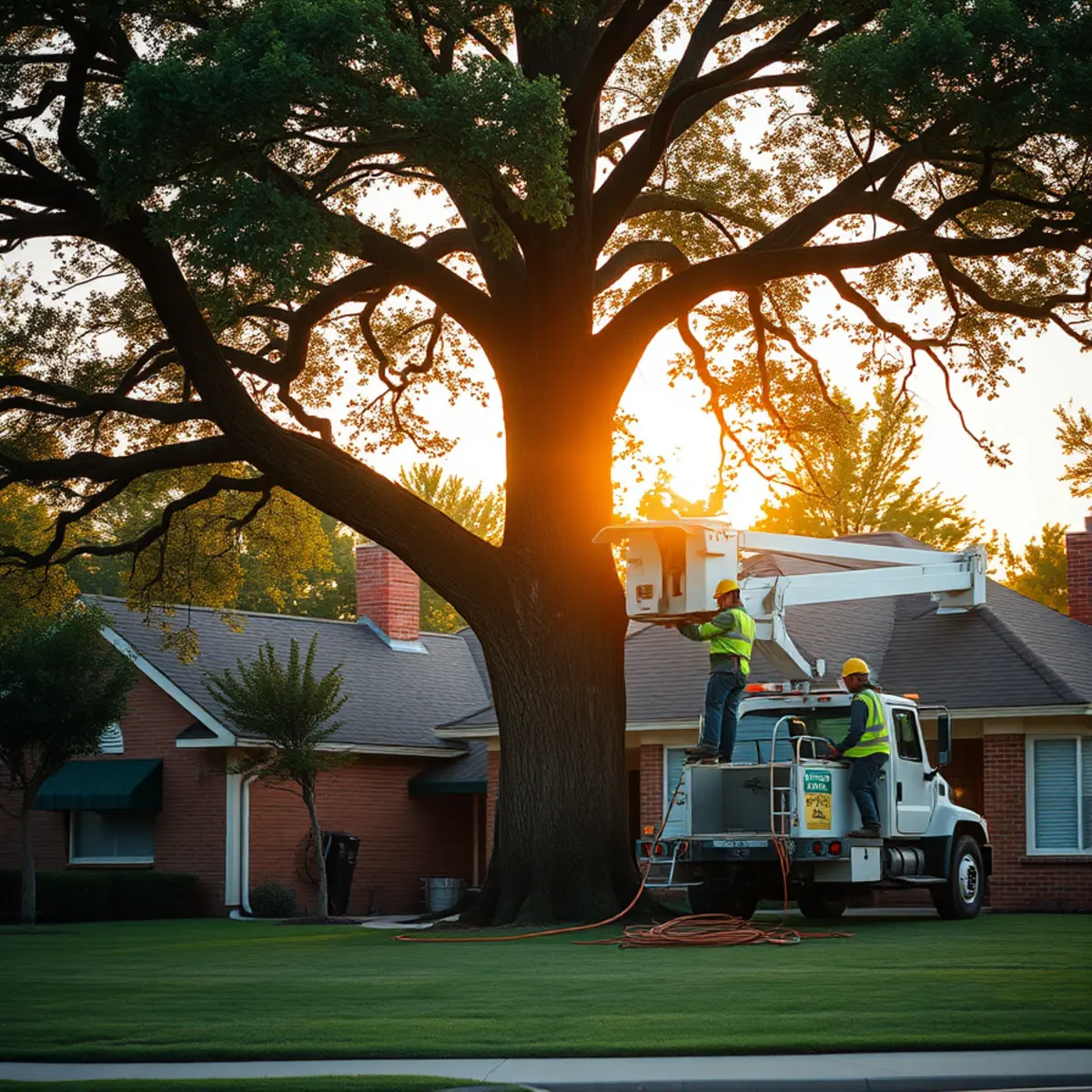
You had a tree taken down, and now there's a stump sitting in the yard. The next question almost everyone in Fort Worth asks is the same: do you grind it or pull it out completely? They sound similar, but they are two different jobs with different costs, different cleanup, and different long-term results.
Here is a straightforward look at stump removal vs stump grinding, written for North Texas yards, post oak and live oak roots, and our tough clay soil. The goal is to help you choose the right option the first time so you are not paying twice.
What's the actual difference?
The two methods solve the same surface problem but in very different ways.
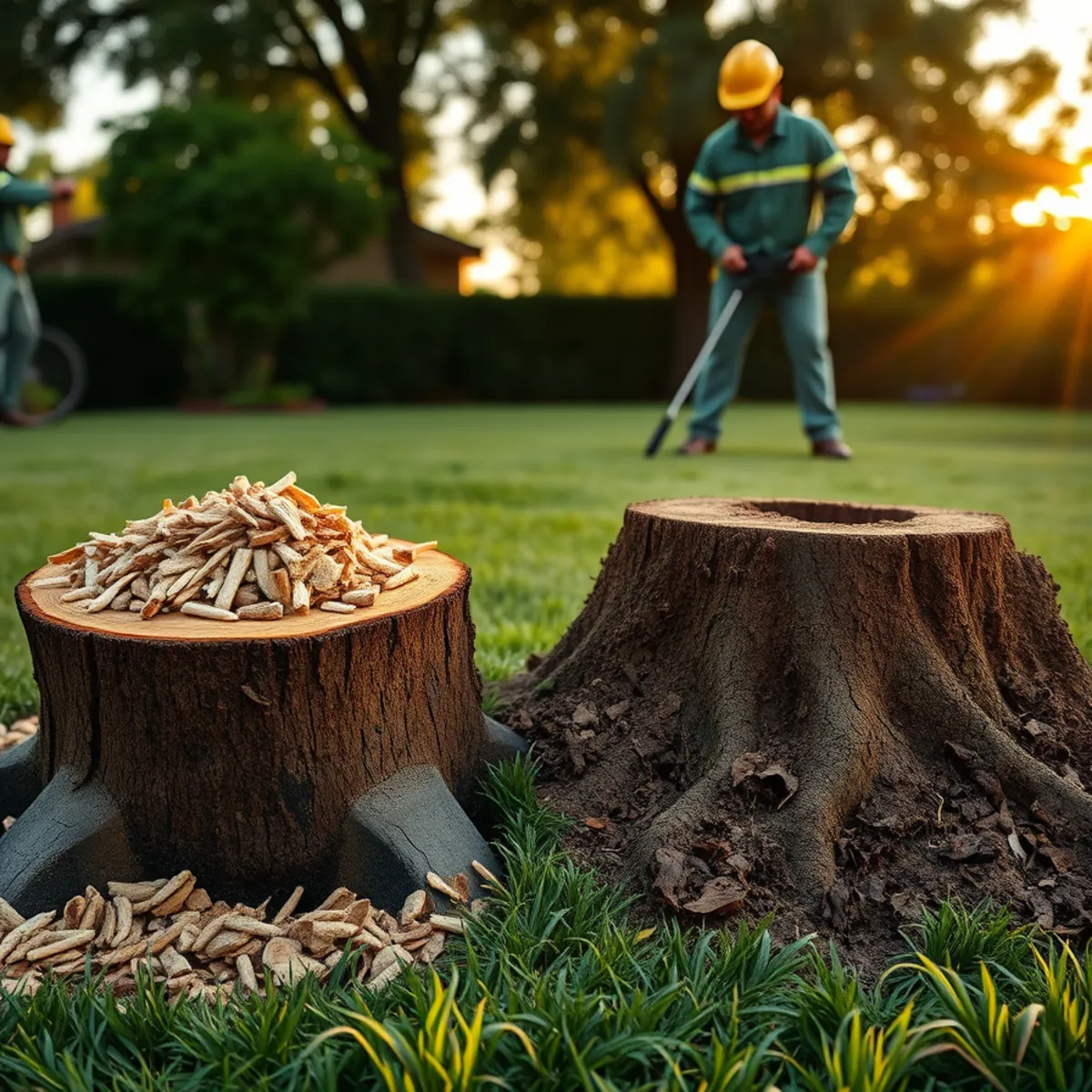
- Stump grinding uses a machine with a rotating carbide wheel to chip the stump down into wood chips, usually 4 to 12 inches below grade. The visible stump disappears, but the main root system stays in the ground to decay naturally over time.
- Stump removal pulls out the entire stump and the major root ball, often with an excavator or by digging and leveraging it free. You are left with a large hole instead of a stump, and far more of the root system comes out with it.
In plain terms: grinding deals with the part you can see. Removal deals with the part you cannot.
Pros and cons of stump grinding
Grinding is the option most homeowners end up choosing, and for good reason. It is faster, less invasive, and easier on the surrounding lawn and hardscape.
- Faster and lower cost than full removal in most cases.
- Minimal disturbance to the surrounding lawn, sprinkler lines, and nearby tree roots.
- Leaves a pile of usable wood chips you can spread as mulch.
- You can replant grass over the spot fairly quickly once the chips are removed and topsoil is added.
The trade-offs are worth knowing. The roots stay in the ground, so on fast-sprouting species like hackberry, crepe myrtle, or chinaberry you may see suckers pop up before the roots fully die back. You also cannot plant a new tree in the exact same spot, because the old root mass is still down there. And as the buried roots decay over several years, the ground above can settle slightly and need a topsoil top-off.
Pros and cons of full stump removal
Removal is the more thorough option, and sometimes it is the right call, but it comes with bigger impacts.
- Takes out the stump and most of the major roots, which all but eliminates regrowth.
- Clears the spot so you can plant a new tree, pour a slab, build a deck, or run a fence line without an old root mass in the way.
- No slow decay and settling to deal with later.
The downsides are real. Removal leaves a large hole that has to be backfilled and compacted, often with imported soil. It is more disruptive in our expansive clay, where big root balls grip hard and machinery can tear up a lawn, driveway edge, or irrigation lines. Because it is more labor and equipment intensive, it costs more than grinding. For a mature live oak or pecan with a wide, deep root system, full removal is a significant excavation.
What it costs and what drives the price
We do not post flat prices online, because no two stumps are the same and an honest number requires a quick look. What we can do is tell you exactly what moves the price up or down so there are no surprises. With Sion Tree Service, the number we quote is the number you pay.
- Stump diameter and how many you need done, often priced by the inch.
- Species and root spread. Oak and pecan have dense, far-reaching roots; crepe myrtle is much lighter.
- Access. A tight backyard gate, slopes, or stumps near a fence, foundation, or pool limit which equipment can be used.
- Grinding depth and whether you want surface roots chased and ground out too.
- Soil conditions. Rocky fill or rock-hard, dry clay slows the work.
- Cleanup choices, such as hauling chips away versus leaving them as mulch, and backfilling a removal hole with topsoil.
As a general rule, grinding costs less than full removal for a stump of the same size, because there is less digging, less hauling, and less restoration afterward.
Regrowth and pests: the part people forget
This is where North Texas conditions really matter. A stump and its roots left in the ground are not just an eyesore, they can become a problem.
On regrowth: certain trees fight to come back. Hackberry, chinaberry, mulberry, and crepe myrtle are notorious for sending up suckers from roots left behind after grinding. Grinding deeper and treating stubborn sprouts knocks this back, but if zero regrowth is the priority, full removal is the surer bet.
On pests and decay: a moist, decaying stump is an open invitation to termites, carpenter ants, and wood-boring beetles, and a damp clay yard keeps it moist. A rotting stump within a few feet of your foundation or wood fence is worth taking seriously. Decaying roots can also host fungal organisms. With oaks especially, fresh-cut wood and open wounds are a concern during oak wilt season, which is why we avoid pruning oaks from February through June and handle cut surfaces carefully.
How to choose for your yard
Most of the decision comes down to what you plan to do with the space and how close the stump sits to things you care about. Use this as a quick guide.
- Choose grinding if you mainly want the stump gone, plan to keep the area as lawn or bed, and the stump is not crowding a foundation, slab, or fence.
- Choose removal if you want to replant a tree in the same spot, pour concrete, build, or run a fence, or if you need every major root out for pest or settling reasons.
- Lean toward removal for known sucker-happy species when you want no regrowth at all.
- When in doubt, get eyes on it. The right answer often depends on species, root spread, and access that are hard to judge from a photo.
Both methods, done right, end with a clean yard. The difference between a good job and a frustrating one is usually the cleanup and the honesty of the quote, and that is exactly where we focus.
Get a free, no-pressure estimate
If you have a stump in Fort Worth or anywhere across DFW, the fastest way to know whether grinding or removal makes sense is to have someone who does this every day take a look. Sion Tree Service is local, licensed and insured, and known for honest quoted-equals-final pricing and immaculate cleanup, like we were never there. We often have same-day or next-day availability. Call (208) 635-2100 for a free estimate and we will walk the options with you.
Restoring the spot afterward in North Texas clay
What you do with the bare patch is half the job, and it plays out differently here than it would in loose loam. Whether you ground the stump or pulled it, you are left with disturbed soil sitting in heavy Blackland clay that swells when wet and cracks when dry. Skipping the restoration step is the single most common reason a finished stump job still looks rough six months later.
The wood chips left behind by grinding are the first trap. As they break down they pull nitrogen out of the surrounding soil, so grass seeded straight into a chip pile comes up thin, pale, and patchy. Rake out most of the chips, save them for mulch on a bed away from the lawn, and bring in clean topsoil to backfill.
- Mound the backfill a few inches proud of grade. Decaying roots and settling clay will pull it down over the first year or two, and a slight crown keeps it from becoming a low spot that ponds water.
- Mix in some compost with the topsoil. Native clay alone packs tight and drains poorly, and a finished stump hole is a good chance to give new grass roots something better to grab.
- Add a slow-release nitrogen fertilizer if you are seeding, to offset whatever the leftover chip fragments tie up as they rot.
- Plan to come back with a second topsoil top-off. On a full removal especially, the backfilled hole will keep sinking as it compacts, and one round of dirt is rarely enough.
On timing, work with the North Texas calendar rather than against it. Bermuda and other warm-season lawns establish best when laid or seeded from late spring into summer, while fall is the window for cool-season grasses and overseeding. Sod knits faster than seed over a patch like this and hides the scar sooner, which is why most homeowners go that route on a visible front-yard spot.
What about chemicals, Epsom salt, or burning the stump?
Search around and you will find plenty of advice to rot a stump out with chemical stump removers, Epsom salt, or a slow fire. People ask us about these constantly, so it is worth being straight about how they actually perform on a mature North Texas stump.
The chemical and salt methods work by speeding up decay, not by removing anything. You drill holes, pack in potassium nitrate stump remover or Epsom salt, keep it wet, and wait. On a big post oak or pecan you are looking at months to a couple of years before the wood is soft, and even then the root system stays in the ground exactly like it would after grinding. For the time involved, grinding gets you the same end result in an afternoon.
- Burning is the option to be most careful with here. Tarrant, Parker, Johnson, and Denton counties issue outdoor burn bans during dry spells, and our spring-into-summer drought and wind make a smoldering stump near a wood fence or home a genuine hazard. A stump fire can also creep along buried roots underground for days.
- Salt and high-strength chemicals leach into the surrounding soil and can stunt the grass, shrubs, and tree roots nearby, which matters when the stump sits in a bed or close to a live oak you want to keep.
- None of these methods touch the regrowth question on sucker-prone species, because the roots are left in place to keep sprouting while the stump slowly rots.
There is a place for the slow chemical approach: a small, out-of-the-way stump where you are in no hurry and cannot get a grinder to it. For anything in the main yard, near the house, or on a species that fights back, grinding or removal is faster, safer, and done the same day.
FAQs
Usually not, but it can. Grinding removes the visible stump while leaving the roots to decay underground. Fast-sprouting North Texas species like hackberry, mulberry, chinaberry, and crepe myrtle may send up suckers from those roots. Grinding deeper and treating any sprouts controls it, and full removal eliminates the risk entirely.
Not in the exact spot after grinding, because the old root mass is still in the ground and the soil is full of wood chips. If you want to replant a tree in the same location, full stump removal is the better choice since it clears out the root ball and lets you backfill with fresh topsoil.
Grinding is almost always less expensive for the same size stump because it involves less digging, hauling, and yard restoration. Removal costs more since it pulls the entire root ball and leaves a hole to backfill. Final price depends on diameter, species, access, and soil, so we provide a free on-site estimate with no surprises.
Rake out most of them, especially if you want lawn over the spot. As the chips decompose they pull nitrogen from the soil and leave new grass thin and yellow. Save the chips as mulch for a bed elsewhere, then backfill the hole with clean topsoil and compost instead.
Months on a small stump and often a year or more on a mature oak or pecan, since these methods only speed up natural rot. The roots also stay in the ground the whole time, just like after grinding. For most yards a grinder gets you the same result in a single visit.
For warm-season lawns like Bermuda, late spring through summer gives the fastest fill-in, while fall suits cool-season grasses and overseeding. Sod knits quicker than seed and hides the patch sooner on a visible spot. Either way, clear the chips and lay fresh topsoil first.