The Best and Worst Time to Prune Oaks in Fort Worth
If you own an oak in Fort Worth, the single most important pruning decision you make has nothing to do with how you cut. It's when you cut. North Texas is firmly inside oak wilt country, and a well-meaning trim made during the wrong months can open the door to a disease that kills live oaks and red oaks fast. Get the timing right and the same cut barely registers.
This guide lays out the best and worst times to prune oaks in our part of Texas, why the calendar matters so much here, and how to handle storm damage when a branch fails out of season. It's written for DFW conditions specifically, not generic advice pulled from a cooler climate.
The best time to prune oaks in Texas: the dormant season
The safest window to prune oaks in Fort Worth is the heart of winter, roughly mid-July through January, with the deep-dormant months of December and January being ideal. During this stretch the sap-feeding beetles that spread oak wilt are far less active, and the fungus that causes the disease is not producing the spore mats that those beetles carry from tree to tree. Cool, dormant-season pruning also lets the tree seal wounds before the spring growth flush.
Winter pruning has practical advantages too. With the leaves down on deciduous oaks like post oak, bur oak, and red oak, the branch structure is fully visible, so it's easier to spot crossing limbs, deadwood, and weak attachments. The tree is storing energy rather than spending it, so it recovers cleanly when warm weather returns.
- Best overall: December and January, when oaks are fully dormant and beetle activity is lowest
- Generally safe: mid-summer through fall, outside the high-risk spring window
- Acceptable for light, necessary cuts: any time, if you immediately seal the wound
- Worst: February through June, the oak wilt danger zone
The worst time: why you avoid pruning oaks February through June
From roughly February into June, two things line up badly in North Texas. The fungus that causes oak wilt forms spore mats under the bark of recently killed red oaks, and the small beetles that feed on tree sap become active and start flying. A fresh pruning wound on a healthy oak smells like an open invitation. A beetle that fed on an infected tree lands on your cut, and the disease moves in.
Oak wilt is not a minor problem. Live oaks are especially vulnerable because their roots graft together underground, so the fungus can spread from tree to tree across a yard or a whole street. Red oaks tend to die quickly once infected and become the spore factories that fuel new outbreaks. Because of that, the standing guidance across Texas, including here in Tarrant County, is simple: do not make pruning cuts on oaks from February through June unless it's a genuine emergency.
If you only remember one rule from this article, make it this one. Schedule routine oak pruning for winter and keep the saw away from your oaks in spring.
Sealing oak pruning cuts: a Texas exception to the rule
For most trees and most species, arborists no longer recommend painting over pruning cuts, because the sealant doesn't speed healing and can trap moisture. Oaks in oak wilt country are the exception. Here, the goal isn't to help the wound heal faster; it's to keep beetles off the fresh cut during the hours and days it stays attractive to them.
- Seal every fresh cut on an oak immediately, the same day, no matter the season
- Use a thin coat of pruning paint or even latex paint over the exposed wood
- This matters most for any cutting done in the high-risk spring months or for storm damage
- It's still smart practice on dormant-season oak cuts as cheap insurance
Sealing is not a license to prune oaks whenever you feel like it. It reduces risk, but the timing rule still comes first. Think of paint as a backup, not a substitute for waiting until winter.
Storm damage and broken limbs out of season
North Texas spring and early summer bring hail, straight-line winds, and the occasional severe storm right in the middle of the oak wilt danger window. So what do you do when a big oak limb cracks in May? You deal with it. A hanging, split, or broken limb is a safety hazard and an open wound regardless of the calendar, and leaving it is worse than making a clean cut.
The right move is to make a proper cut back to sound wood, then seal that wound right away. The combination of a clean cut and immediate sealing is the accepted way to handle emergency oak work during the off-limits months. This is also where a trained crew earns its keep, because storm-damaged limbs are often under tension and can spring or fall unpredictably.
- Keep people and vehicles away from the damaged limb until it's handled
- Have it cut cleanly back to a healthy branch collar, not torn or left ragged
- Seal the fresh wound immediately to deter sap beetles
- Have the debris hauled away so it isn't a hazard or pest harbor
A simple oak pruning calendar for Fort Worth
Pulling it together for our climate, here's how the year shakes out for oaks in the DFW area. Use winter for anything that can wait, treat spring as hands-off, and reserve out-of-season cuts for true emergencies that get sealed on the spot.
- December to January: prime time for structural and routine oak pruning
- February to June: do not prune oaks; emergency cuts only, sealed immediately
- July to early fall: a reasonable secondary window for needed work
- Year-round: seal any oak wound the same day, and never prune a stressed, freshly transplanted oak harder than necessary
One more local note: many North Texas oaks are still carrying stress from drought cycles, expansive clay soil that swells and shrinks, and lingering effects of the February 2021 freeze. A stressed tree has fewer reserves to seal wounds and fight disease, which is one more reason to prune on the conservative winter schedule rather than improvising in spring.
When to call a professional
Light shaping of small, reachable branches in winter is reasonable for a careful homeowner with clean, sharp tools. But large limbs, anything near power lines, climbing work, and any oak that may already be showing decline are jobs for a trained crew. The stakes with oaks are higher than with most trees, because a single badly timed or poorly placed cut can set off a disease problem that affects your whole property.
Sion Tree Service is a locally owned, licensed and insured tree service based in Fort Worth, serving the DFW metroplex. We know the oak wilt calendar, we seal cuts the right way, and we clean up and haul away every scrap so it looks like we were never there. If you want an honest assessment of your oaks and a clear, quoted-equals-final price, reach out for a free estimate at (208) 635-2100 and we'll help you prune at the right time, the right way.
How to spot oak wilt before it spreads across your yard
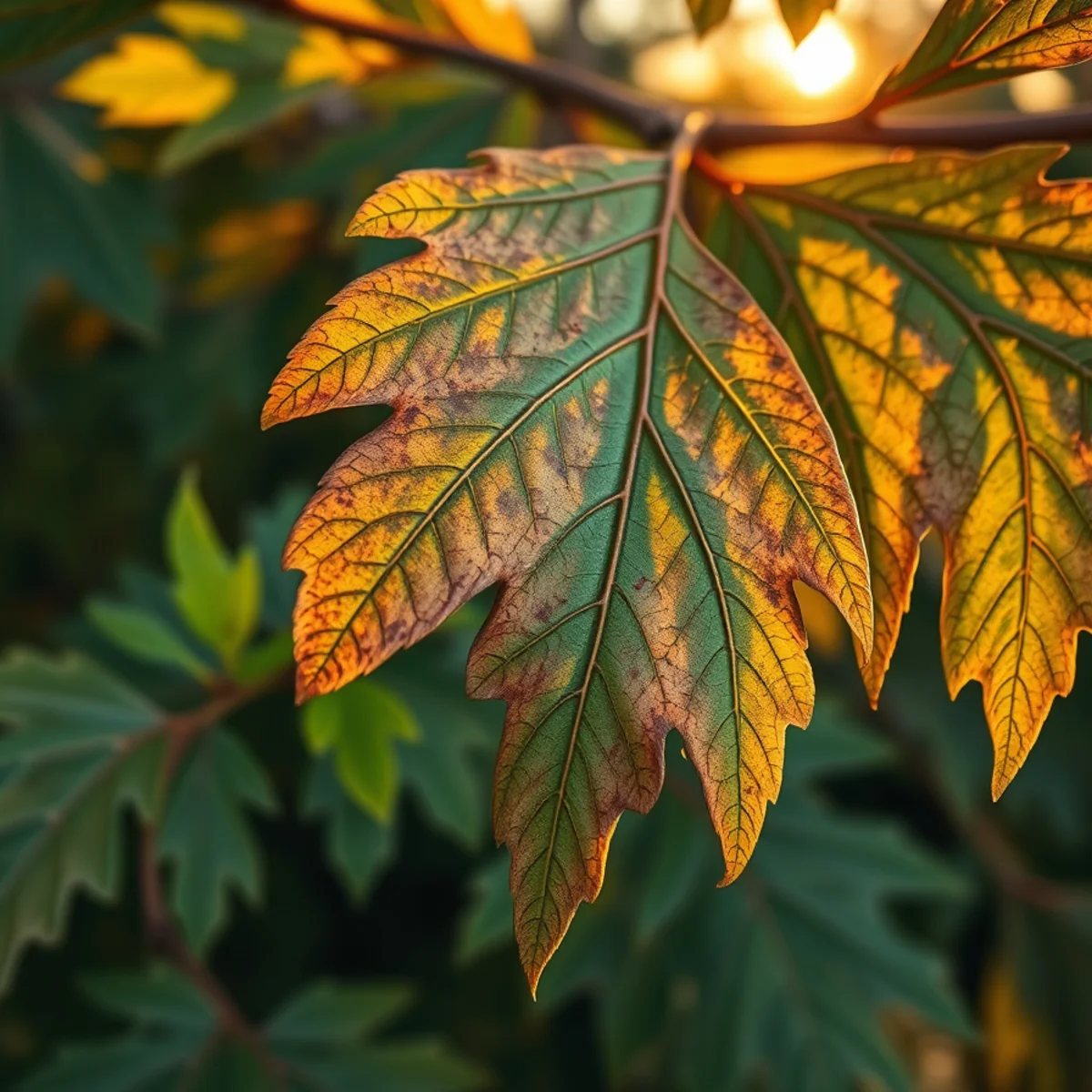
Timing your cuts is prevention. Knowing what an active infection looks like is the other half, because in North Texas the disease often shows up in a yard before anyone realizes a single tree is sick. On our live oaks, the classic tell is veinal necrosis: the veins of a leaf yellow and then brown while the tissue between them stays greener, a pattern people describe as looking like fish bones. Red oaks usually skip the subtlety and brown out fast, dropping leaves in summer that are still partly green.
Because live oaks across a street or fence line often share grafted roots, an infection rarely stays put. It marches outward through the root system, killing trees in a widening pocket rather than jumping randomly around the block. If you see one oak crashing and the neighbor's oak 40 feet away starting to thin from the top down, assume the two are connected underground until proven otherwise.
- Live oak: yellow-to-brown veins with greener leaf tissue between them, often starting in one part of the canopy
- Red oak (Shumard, Spanish, blackjack): rapid summer wilt, leaves browning from the edges while still holding green
- A run of declining oaks in a line or expanding circle, not scattered randomly, points to root-graft spread
- Narrow bark cracks with a sweet, fermenting-fruit smell on a dead red oak are spore mats, the beetle fuel
If you suspect it, do not start cutting on a hunch. A certified arborist can pull a sample for the Texas Plant Disease Diagnostic Lab, and confirmation changes the whole game plan. Stopping a confirmed center usually means severing root grafts with a trench dug several feet deep between healthy and infected trees, and sometimes protecting high-value live oaks with a propiconazole injection that has to be repeated every year or so. Those are not DIY moves, but recognizing the early signs and calling early is what keeps a one-tree problem from becoming a five-tree one.
Handling oak firewood the right way in North Texas
Plenty of Fort Worth households burn oak, and we season and sell firewood ourselves, so this one is worth saying plainly: unseasoned red oak is the single most overlooked way oak wilt hitchhikes into a new neighborhood. A freshly cut red oak from an infected tree can grow spore mats under the bark for a year or more, and stacking that wood next to your live oaks is like parking a beetle buffet at the base of healthy trees.
The good news is that a real North Texas summer does most of the work for you. Wood that has been cut and dried for a full year, with loose bark and cracked ends, is considered safe. The heat and drought we bake firewood in through July and August kill the fungus. The risk lives almost entirely in green, recently split red oak of unknown origin.
- Burn season, not source, is the safe bet: fully seasoned oak with loose bark and split, checked ends does not spread the disease
- If you take wood of unknown history, cover the pile with clear plastic and bury the edges for a year so any spore mats dry out and beetles can't get in or out
- Be most cautious with green red oak; live oak and white oak don't form the spore mats that fuel beetle spread
- Burning infected wood is fine in the fireplace itself, the danger is the woodpile sitting next to living oaks, not the fire
If a contractor takes down a red oak on your property between late winter and early summer, ask where the wood is going. Leaving fresh red oak rounds piled in the yard during the high-risk months is one of those small decisions that quietly undoes careful pruning timing.
FAQs
The best time is the dormant season, roughly December and January, when oaks are inactive and the sap beetles that spread oak wilt are least active. Mid-summer through fall is a reasonable secondary window.
That's the high-risk oak wilt window in North Texas. The fungus is producing spore mats and the beetles that carry it are flying, so a fresh wound can lead to infection. Save routine oak pruning for winter.
Yes. Unlike most trees, oaks in oak wilt country should have every fresh cut sealed the same day with pruning or latex paint to deter beetles. This is essential for any emergency or storm-damage cut made outside the dormant season.
Oak wilt on live oaks shows a specific pattern called veinal necrosis, where the leaf veins brown while the tissue between stays greener, and it tends to move through a pocket of connected trees. Generic drought or freeze damage usually browns leaves more uniformly and hits a single stressed tree rather than marching from one oak to the next. When the decline spreads to neighboring oaks in a line or circle, get a lab-confirmed diagnosis before doing anything.
Often yes, if you act early. Because live oaks share grafted roots, stopping a confirmed infection usually means trenching several feet deep to cut the root connections between sick and healthy trees, and high-value oaks can sometimes be protected with a repeated propiconazole injection. Both are arborist jobs, and the sooner the center is confirmed and contained, the fewer trees you lose.
Focus on training a single dominant central leader and removing competing codominant stems while the tree is young, doing this work in the dormant winter window like any oak pruning. Go light, take only a small share of the live canopy in any one year, and space the work out over several seasons rather than making big cuts all at once. Building good structure early means far fewer large, wound-prone cuts on the mature tree later.